
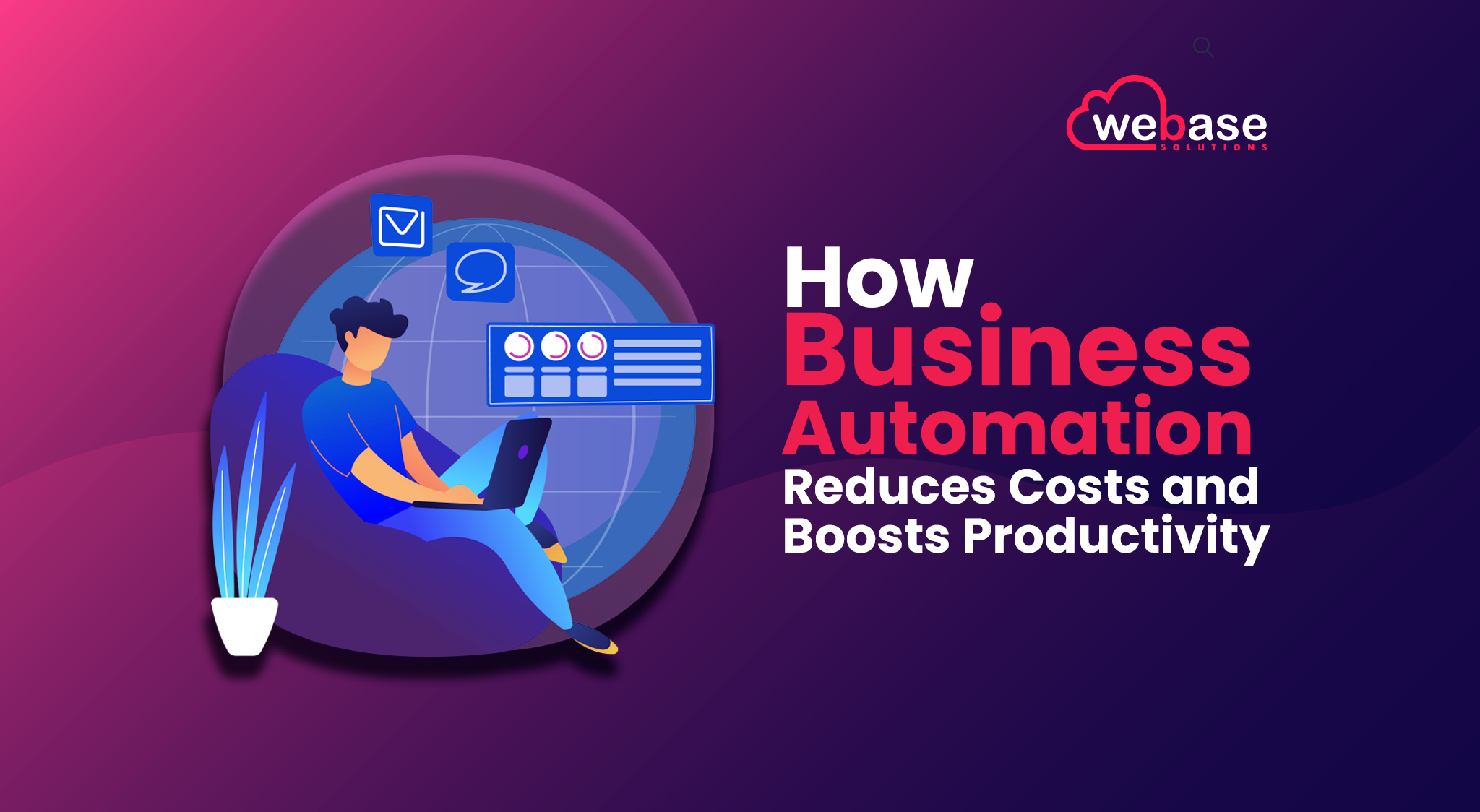
In today’s competitive business world, companies are constantly searching for smarter ways to improve efficiency, reduce operational expenses, and increase productivity. One of the most effective solutions is business automation. From automating repetitive tasks to improving workflow accuracy, automation is transforming how modern businesses operate.
Whether it’s a small startup or a large enterprise, automation tools help organizations save time, minimize human errors, and focus on strategic growth. In this article, we will explore how business automation reduces costs and boosts productivity while helping companies stay ahead in the digital era.
Business automation refers to the use of technology, software, and digital tools to perform tasks with minimal human intervention. These tasks can include:
Automation systems streamline daily operations and allow employees to focus on higher-value work instead of repetitive manual processes.
One of the biggest advantages of business automation is cost reduction. Manual processes often require more employees, more working hours, and higher operational expenses. Automation helps businesses lower these costs significantly.
For example, automated accounting software can process invoices and financial reports much faster than manual bookkeeping, reducing labor costs and improving accuracy.
Employees spend a large portion of their workday performing repetitive tasks. Automation eliminates these time-consuming activities and allows teams to focus on more important responsibilities.
When employees can focus on creativity, problem-solving, and customer relationships, overall business performance improves dramatically.
Manual processes are more likely to lead to mistakes, especially when dealing with large amounts of data. Business automation ensures tasks are completed consistently and accurately.
Reducing errors helps businesses avoid financial losses and maintain a professional reputation.
Time is one of the most valuable business assets. Automation speeds up processes that would normally take hours or even days to complete manually.
For example:
This time-saving advantage helps businesses operate more efficiently and respond faster to market demands.
Modern customers expect quick responses and seamless service. Automation helps businesses provide better customer experiences through faster communication and personalized interactions.
Improved customer satisfaction often leads to higher retention rates and increased sales.
CRM platforms automate customer communication, lead tracking, and sales management.
Marketing tools automate email campaigns, social media scheduling, and customer targeting.
Accounting software automates invoicing, payroll, and expense tracking.
Workflow platforms streamline approvals, project management, and internal communication.
Automation tools help businesses track stock levels and manage supply chains efficiently.
Business automation is now widely used across many industries, including:
Each industry benefits from faster operations, lower costs, and improved productivity.
Although automation offers many benefits, businesses should also consider certain challenges:
Some automation systems require upfront investment in software and employee training.
Employees may need time to learn new systems and workflows.
Businesses must ensure their automation tools have strong cybersecurity protection.
Older systems may not always integrate smoothly with modern automation platforms.
Despite these challenges, the long-term advantages usually outweigh the initial difficulties.
The future of business automation looks incredibly promising. Technologies like Artificial Intelligence (AI), Machine Learning, and Robotic Process Automation (RPA) are making automation smarter and more efficient.
Future trends may include:
Businesses that adopt automation early are likely to gain a significant competitive advantage.
Business automation is no longer a luxury—it has become a necessity for companies that want to grow efficiently in today’s fast-moving digital world. By reducing operational costs, increasing productivity, improving accuracy, and saving time, automation helps businesses operate smarter and achieve long-term success.
Organizations that invest in automation can improve employee performance, enhance customer experiences, and stay competitive in an increasingly technology-driven marketplace.
As automation technology continues to evolve, businesses that embrace digital transformation today will be better prepared for the future.
Lorem ipsum dolor sit amet consectetur adipisicing elit. Porro, ea, laboriosam animi sunt eaque tenetur, saepe eveniet officiis quidem repellendus ipsam aspernatur ullam earum accusantium!
Lorem ipsum dolor sit amet consectetur adipisicing elit. Porro, ea, laboriosam animi sunt eaque tenetur, saepe eveniet officiis quidem repellendus ipsam aspernatur ullam earum accusantium!


Lorem ipsum dolor sit amet consectetur adipisicing elit. Porro, ea, laboriosam animi sunt eaque tenetur, saepe eveniet officiis quidem repellendus ipsam aspernatur ullam earum accusantium!