
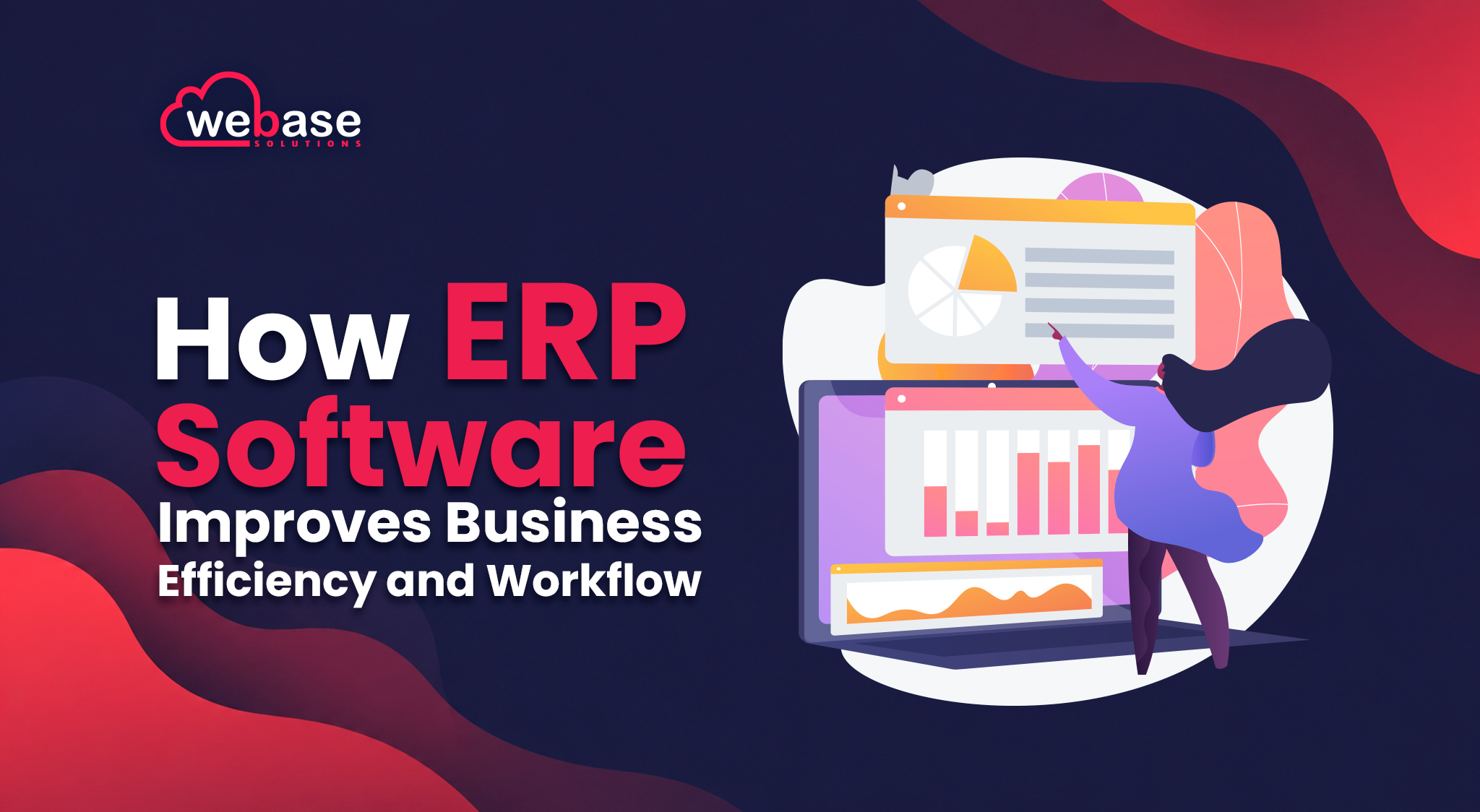
In today's competitive business environment, organizations need smarter ways to manage operations, reduce costs, and increase productivity. Enterprise Resource Planning (ERP) software has become an essential tool for businesses of all sizes, helping them streamline processes and improve overall efficiency. By integrating multiple business functions into a single system, ERP software creates a more organized and productive workplace.
This article explores how ERP software improves business efficiency and workflow, and why investing in an ERP solution can be a game-changer for modern organizations.
ERP (Enterprise Resource Planning) software is a centralized business management system that integrates various departments such as finance, human resources, inventory, sales, procurement, manufacturing, and customer service into one platform.
Instead of using separate software for different functions, businesses can access all critical information through a unified system, ensuring better communication and data accuracy.
One of the biggest advantages of ERP software is the ability to store all business data in a single database.
Benefits include:
Reduced data duplication
Improved data accuracy
Easier access to information
Better collaboration between departments
Employees can quickly retrieve the information they need without switching between multiple systems.
ERP systems automate repetitive and time-consuming tasks such as:
Invoice generation
Payroll processing
Inventory updates
Purchase order management
Financial reporting
Automation reduces human errors and allows employees to focus on more strategic activities that add value to the business.
ERP software standardizes and streamlines business processes across departments.
For example:
Sales orders can automatically trigger inventory checks.
Inventory updates can initiate procurement requests.
Financial records can update in real time after transactions.
This seamless flow of information minimizes delays and improves operational efficiency.
Business leaders need accurate information to make informed decisions.
ERP systems provide:
Real-time dashboards
Custom reports
Performance analytics
Financial insights
With access to current business data, managers can identify opportunities, solve problems quickly, and make strategic decisions with confidence.
Managing inventory manually often leads to stock shortages or overstocking.
ERP software helps businesses:
Monitor stock levels in real time
Forecast demand accurately
Reduce inventory carrying costs
Prevent stockouts
Efficient inventory management improves customer satisfaction while reducing operational expenses.
When employees spend less time on manual data entry and administrative tasks, productivity naturally increases.
ERP systems simplify daily operations by:
Automating workflows
Reducing paperwork
Improving communication
Providing instant access to information
As a result, teams can complete tasks faster and more efficiently.
Customer satisfaction is a key driver of business growth.
ERP software provides customer-facing teams with quick access to:
Order history
Inventory availability
Delivery status
Customer information
This enables faster response times and more personalized customer experiences.
ERP software gives businesses greater control over their finances by integrating accounting and financial operations.
Key financial benefits include:
Accurate financial reporting
Budget tracking
Cash flow monitoring
Regulatory compliance
Real-time financial visibility helps businesses maintain profitability and financial stability.
Faster order processing
Improved customer management
Better sales forecasting
Automated accounting
Real-time financial reporting
Improved budget management
Simplified payroll processing
Employee performance tracking
Attendance management
Real-time stock monitoring
Supplier management
Demand forecasting
Faster issue resolution
Improved communication
Better customer retention
By connecting these departments through a single platform, ERP software eliminates information silos and creates a smoother workflow.
Implementing ERP software offers long-term advantages such as:
Reduced operational costs
Improved business scalability
Increased profitability
Stronger regulatory compliance
Better business visibility
Enhanced customer satisfaction
As organizations grow, ERP systems can adapt to changing business needs, making them a valuable long-term investment.
When selecting an ERP system, businesses should consider:
Company size and industry
Required features and modules
Ease of use
Integration capabilities
Scalability
Vendor support
Total cost of ownership
Choosing the right ERP solution ensures maximum return on investment and long-term operational success.
ERP software plays a critical role in improving business efficiency and workflow by integrating departments, automating processes, and providing real-time insights. From inventory management and finance to customer service and human resources, ERP systems help organizations operate more effectively and make better decisions.
Businesses that adopt ERP software can reduce costs, improve productivity, enhance customer satisfaction, and position themselves for sustainable growth in an increasingly competitive marketplace.
By investing in the right ERP solution, companies can transform their operations and build a stronger foundation for future success.
Lorem ipsum dolor sit amet consectetur adipisicing elit. Porro, ea, laboriosam animi sunt eaque tenetur, saepe eveniet officiis quidem repellendus ipsam aspernatur ullam earum accusantium!
Lorem ipsum dolor sit amet consectetur adipisicing elit. Porro, ea, laboriosam animi sunt eaque tenetur, saepe eveniet officiis quidem repellendus ipsam aspernatur ullam earum accusantium!

Lorem ipsum dolor sit amet consectetur adipisicing elit. Porro, ea, laboriosam animi sunt eaque tenetur, saepe eveniet officiis quidem repellendus ipsam aspernatur ullam earum accusantium!