

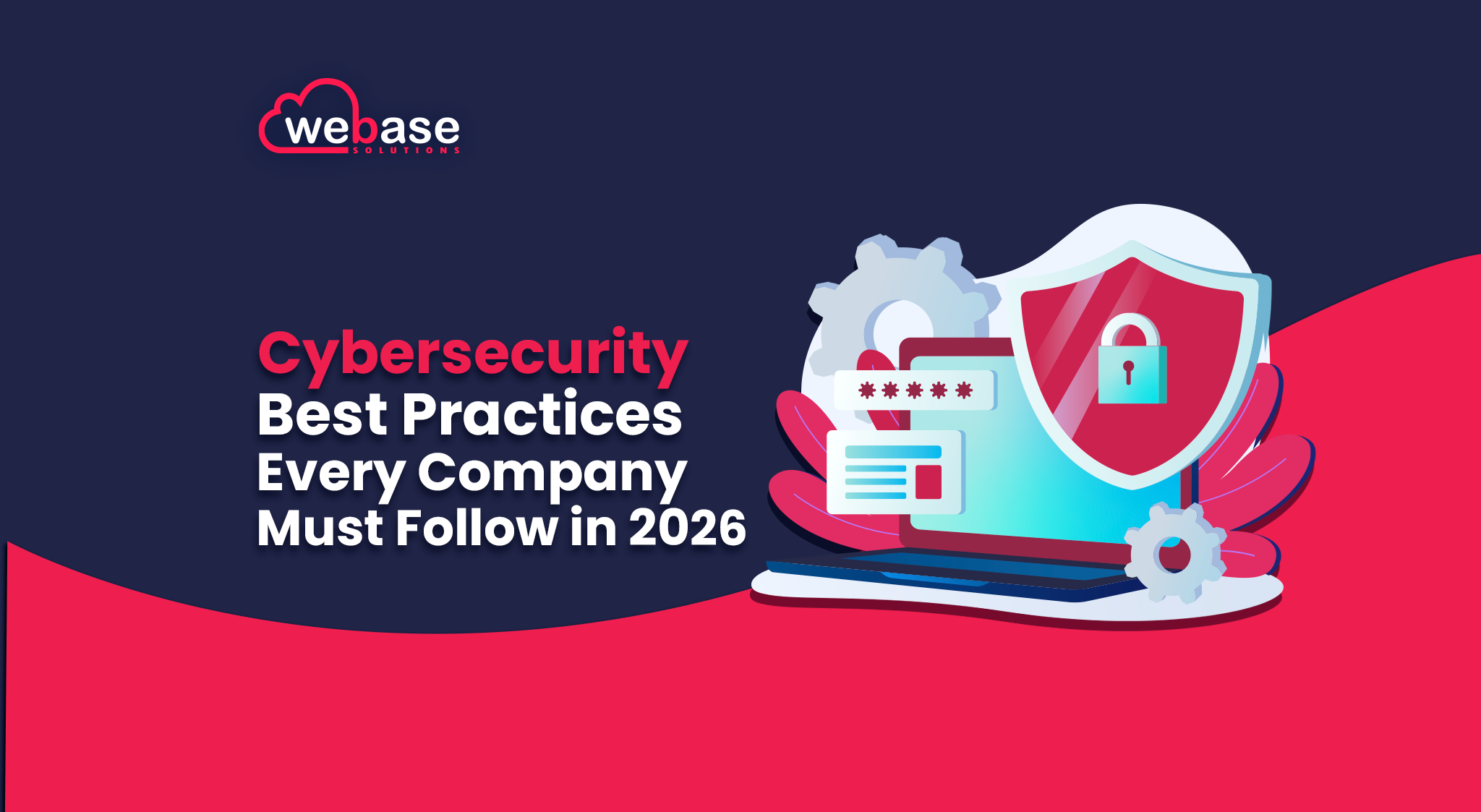
In 2026, cybersecurity is no longer just an IT concern - it has become a core business priority. From startups to multinational corporations, every company faces increasing threats from ransomware, phishing attacks, AI-powered scams, and data breaches. As businesses rely more on cloud computing, remote work, and digital platforms, cybercriminals are finding smarter ways to exploit vulnerabilities.
A single cyberattack can damage a company’s reputation, expose customer information, disrupt operations, and lead to massive financial losses. That is why organizations must adopt strong cybersecurity strategies to protect their systems, employees, and customers.
This article explores the most important cybersecurity best practices every company should follow in 2026 to stay secure in an increasingly connected world.
The digital landscape is evolving rapidly. Businesses now store sensitive data online, use AI-driven applications, and manage remote teams across multiple locations. While these technologies improve productivity, they also create new opportunities for cyber threats.
Modern cyberattacks are more sophisticated than ever. Hackers use artificial intelligence, social engineering, and automated malware to target businesses of all sizes. Small companies are especially vulnerable because many still lack advanced security systems.
Investing in cybersecurity is no longer optional. It is essential for business continuity, customer trust, and long-term growth.
One of the biggest cybersecurity trends in 2026 is the adoption of the Zero Trust model.
Zero Trust operates on a simple principle:
“Never trust, always verify.”
Instead of automatically trusting users inside a company network, every user and device must continuously verify their identity before accessing systems or data.
Zero Trust significantly reduces the risk of insider threats and unauthorized access.
Passwords alone are no longer enough to protect business accounts.
Cybercriminals can easily steal passwords through phishing emails, data leaks, or brute-force attacks. Multi-factor authentication adds an extra layer of protection by requiring additional verification, such as:
In 2026, MFA should be enabled across:
Businesses that fail to use MFA face a much higher risk of account compromise.
Human error remains one of the leading causes of security breaches.
Even the most advanced security software cannot fully protect a company if employees click malicious links or download infected files.
Regular cybersecurity awareness training helps employees identify:
Creating a cybersecurity-focused workplace culture is essential in 2026.
Outdated software is one of the easiest entry points for hackers.
Software updates often contain important security patches that fix known vulnerabilities. Delaying updates can leave systems exposed to attacks.
Businesses should:
Cybercriminals actively target companies using outdated applications, making timely updates critical for security.
Data encryption converts sensitive information into unreadable code, making it useless to hackers without the correct decryption key.
In 2026, companies should encrypt:
Encryption protects businesses even if attackers gain access to files or databases.
Both data-at-rest and data-in-transit should be encrypted using modern security standards.
Ransomware attacks continue to rise worldwide.
Hackers often lock company files and demand payment to restore access. Without secure backups, businesses may lose critical information permanently.
Reliable backups allow companies to recover quickly without paying ransomware demands.
Remote and hybrid work models remain popular in 2026, but they also introduce new security risks.
Employees working from home may use unsecured Wi-Fi networks, personal devices, or outdated software.
Companies should:
Cyber threats can occur at any time. Continuous monitoring helps businesses detect suspicious activity before major damage occurs.
Modern security systems use AI and machine learning to identify unusual behavior, including:
Real-time monitoring improves response speed and reduces the impact of attacks.
No system is completely immune to cyber threats.
Every company should prepare for worst-case scenarios with a clear incident response strategy.
Fast action during a cyberattack can minimize downtime and financial loss.
Cloud computing continues to dominate modern business operations in 2026.
However, misconfigured cloud environments remain a major security risk.
Companies using cloud platforms should:
Cloud security should be treated as a shared responsibility between businesses and cloud providers.
Cybersecurity strategies must evolve continuously.
Regular security audits help businesses identify weaknesses before attackers exploit them.
Audits should evaluate:
Penetration testing can also simulate real-world attacks to improve defense systems.
Artificial intelligence is transforming cybersecurity in 2026.
AI-powered security tools can:
Businesses adopting AI-driven cybersecurity solutions gain faster protection against evolving digital threats.
Cybersecurity will continue to evolve as technology advances. AI-driven attacks, deepfake scams, and sophisticated ransomware campaigns are expected to become even more common.
Companies that prioritize cybersecurity today will be better prepared for future challenges. Strong security practices not only protect data but also improve customer confidence and business reputation.
Organizations that ignore cybersecurity risks may face severe financial and operational consequences in the years ahead.
Cybersecurity in 2026 is about more than installing antivirus software. It requires a proactive approach that combines technology, employee awareness, strong policies, and continuous monitoring.
By implementing best practices such as Zero Trust security, multi-factor authentication, data encryption, employee training, and regular backups, businesses can significantly reduce their exposure to cyber threats.
As cyberattacks become more advanced, companies that invest in cybersecurity today will build stronger, safer, and more resilient businesses for the future.
Lorem ipsum dolor sit amet consectetur adipisicing elit. Porro, ea, laboriosam animi sunt eaque tenetur, saepe eveniet officiis quidem repellendus ipsam aspernatur ullam earum accusantium!
Lorem ipsum dolor sit amet consectetur adipisicing elit. Porro, ea, laboriosam animi sunt eaque tenetur, saepe eveniet officiis quidem repellendus ipsam aspernatur ullam earum accusantium!

Lorem ipsum dolor sit amet consectetur adipisicing elit. Porro, ea, laboriosam animi sunt eaque tenetur, saepe eveniet officiis quidem repellendus ipsam aspernatur ullam earum accusantium!