
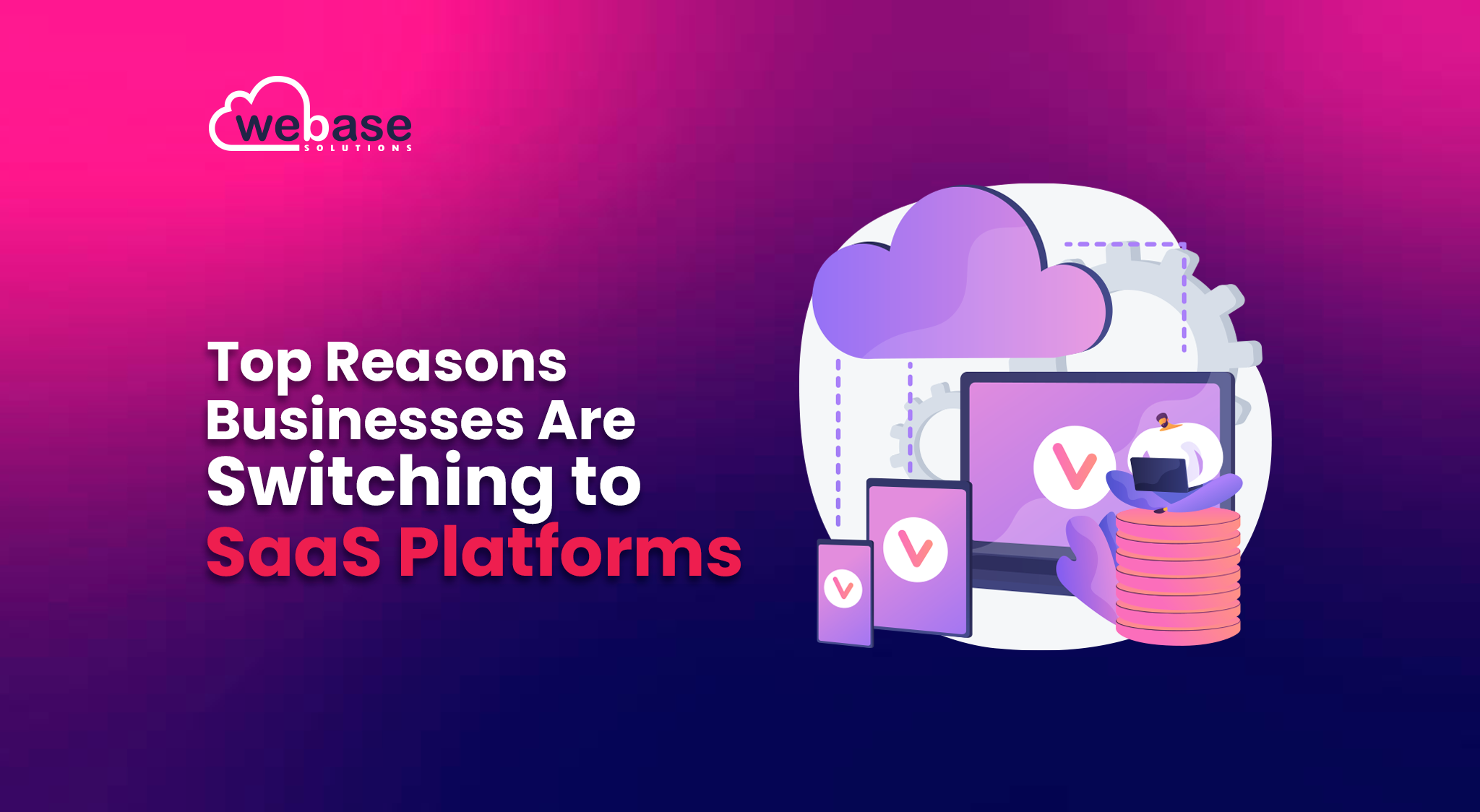
In today's rapidly evolving digital landscape, businesses are constantly searching for ways to improve efficiency, reduce costs, and stay competitive. One technology trend that continues to gain momentum is the adoption of Software as a Service (SaaS) platforms. From startups to large enterprises, organizations across industries are moving away from traditional software solutions and embracing cloud-based applications.
SaaS platforms provide businesses with access to powerful software through the internet, eliminating the need for expensive infrastructure and complex installations. As remote work, digital transformation, and scalability become essential business priorities, SaaS solutions are emerging as the preferred choice.
In this article, we'll explore the top reasons businesses are switching to SaaS platforms and how this transition is helping organizations achieve long-term growth and success.
Software as a Service (SaaS) is a cloud-based software delivery model where users access applications through a web browser. Instead of purchasing and installing software on individual computers or servers, businesses subscribe to a service that is hosted and maintained by the provider.
Popular examples of SaaS platforms include customer relationship management (CRM) systems, project management tools, accounting software, collaboration platforms, and marketing automation solutions.
One of the primary reasons businesses are adopting SaaS platforms is cost efficiency. Traditional software often requires significant investments in hardware, licensing fees, maintenance, and IT support.
SaaS solutions typically operate on a subscription-based model, allowing businesses to pay only for the services they use. This reduces initial capital expenditure and makes advanced software accessible to organizations of all sizes.
No expensive hardware purchases
Predictable monthly or annual costs
Reduced IT maintenance expenses
Better budget management
Business needs can change quickly. Whether a company is growing rapidly or adjusting to market demands, SaaS platforms offer unmatched flexibility.
Organizations can easily add or remove users, upgrade plans, and access new features without investing in additional infrastructure. This scalability makes SaaS ideal for startups, small businesses, and large enterprises alike.
Supports business growth
Flexible subscription plans
Quick deployment of new services
Reduced operational complexity
Traditional software installations can take weeks or even months to implement. SaaS applications, on the other hand, can often be deployed within hours or days.
Since the software is hosted in the cloud, businesses can start using the platform almost immediately after subscribing.
Rapid onboarding
Minimal setup requirements
Faster return on investment
Reduced downtime
Modern workplaces are increasingly distributed, with employees working from various locations. SaaS platforms enable teams to access applications and data from anywhere with an internet connection.
This flexibility supports remote work, hybrid work models, and global collaboration.
Access from any device
Improved workforce mobility
Enhanced team collaboration
Increased productivity
Keeping software updated can be time-consuming and costly. SaaS providers handle updates, security patches, and maintenance automatically.
Businesses always have access to the latest features and improvements without requiring manual installations.
Reduced IT workload
Access to new features instantly
Enhanced security
Improved software performance
Cybersecurity is a major concern for businesses of all sizes. Reputable SaaS providers invest heavily in security measures, including encryption, data backups, threat monitoring, and compliance certifications.
Many organizations find that SaaS platforms offer stronger security protections than they could implement internally.
Advanced security infrastructure
Regular security updates
Data backup and recovery options
Compliance with industry standards
Most SaaS applications are designed with collaboration in mind. Teams can share files, communicate in real-time, and work on projects simultaneously from different locations.
This streamlined collaboration improves workflow efficiency and accelerates decision-making.
Real-time communication
Centralized data access
Faster project completion
Improved team coordination
Modern businesses rely on multiple software applications to manage operations. SaaS platforms often integrate easily with CRM systems, accounting software, marketing tools, and productivity applications.
These integrations create a connected digital ecosystem that improves efficiency and reduces manual work.
Automated workflows
Reduced data entry errors
Better business insights
Improved operational efficiency
Unexpected disruptions such as hardware failures, natural disasters, or cyberattacks can impact business operations. SaaS providers typically offer robust backup systems and disaster recovery capabilities.
Cloud-based infrastructure ensures higher uptime and business continuity.
Reliable service availability
Automatic backups
Disaster recovery support
Reduced operational risk
Businesses are under increasing pressure to innovate and adapt to changing customer expectations. SaaS platforms provide access to cutting-edge technologies such as artificial intelligence, automation, analytics, and machine learning.
These capabilities help organizations modernize operations and remain competitive in a digital-first economy.
Faster innovation
Improved customer experiences
Data-driven decision-making
Competitive advantage
The global shift toward cloud computing continues to accelerate. As technology evolves, SaaS platforms are becoming more sophisticated, secure, and feature-rich.
Businesses that embrace SaaS solutions can benefit from greater agility, lower costs, improved collaboration, and enhanced scalability. These advantages make SaaS a critical component of modern business strategy.
The growing popularity of SaaS platforms is not just a trend—it's a strategic business transformation. Organizations are switching to SaaS because it offers cost savings, flexibility, accessibility, security, and faster innovation.
As businesses continue to navigate digital transformation, SaaS solutions provide the tools needed to adapt, compete, and thrive in an increasingly connected world. Companies that leverage SaaS technology today will be better positioned for sustainable growth and long-term success in the future.
Lorem ipsum dolor sit amet consectetur adipisicing elit. Porro, ea, laboriosam animi sunt eaque tenetur, saepe eveniet officiis quidem repellendus ipsam aspernatur ullam earum accusantium!
Lorem ipsum dolor sit amet consectetur adipisicing elit. Porro, ea, laboriosam animi sunt eaque tenetur, saepe eveniet officiis quidem repellendus ipsam aspernatur ullam earum accusantium!
Lorem ipsum dolor sit amet consectetur adipisicing elit. Porro, ea, laboriosam animi sunt eaque tenetur, saepe eveniet officiis quidem repellendus ipsam aspernatur ullam earum accusantium!